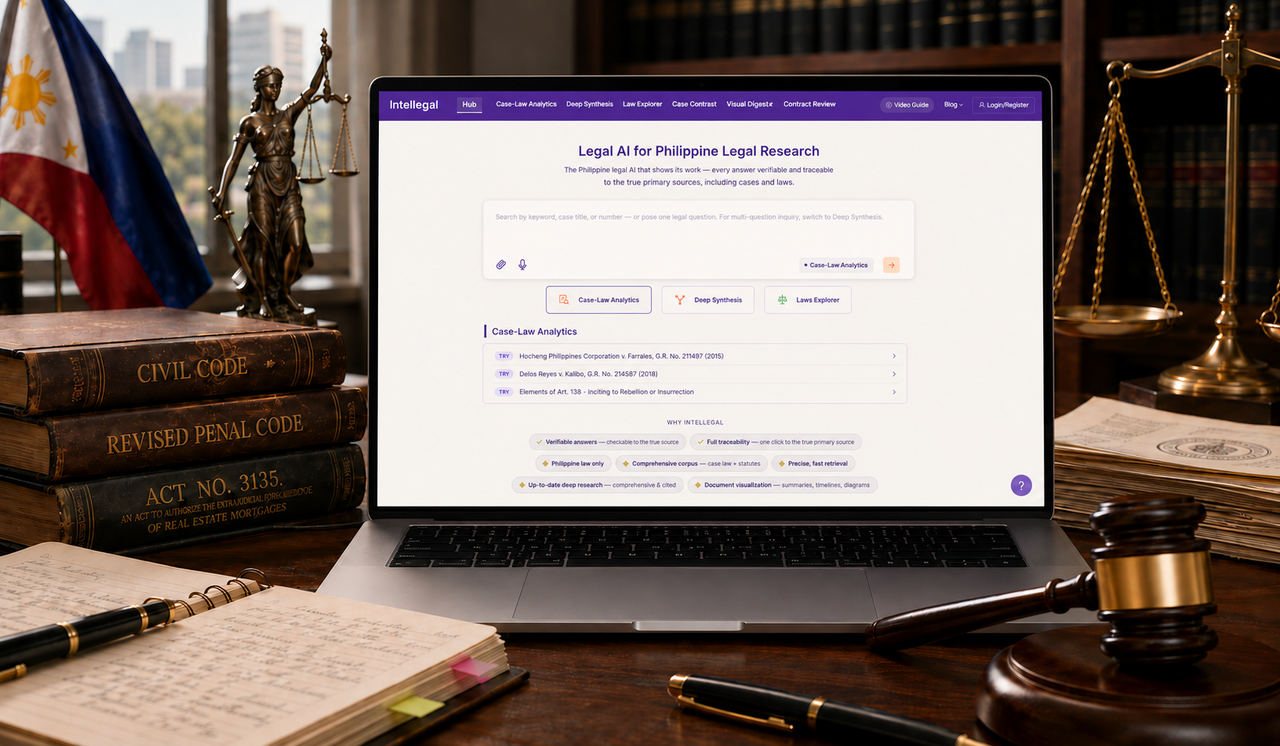
MANILA, PHILIPPINES — Philippine legal technology platform Intellegal has tested its AI-assisted research tools on a complex foreclosure question involving the right to possession of foreclosed property.
The research examined the requirements for obtaining a writ of possession following an extrajudicial foreclosure under Act No. 3135, including situations where a third party is already occupying the property and claims a right independent of the debtor-mortgagor.
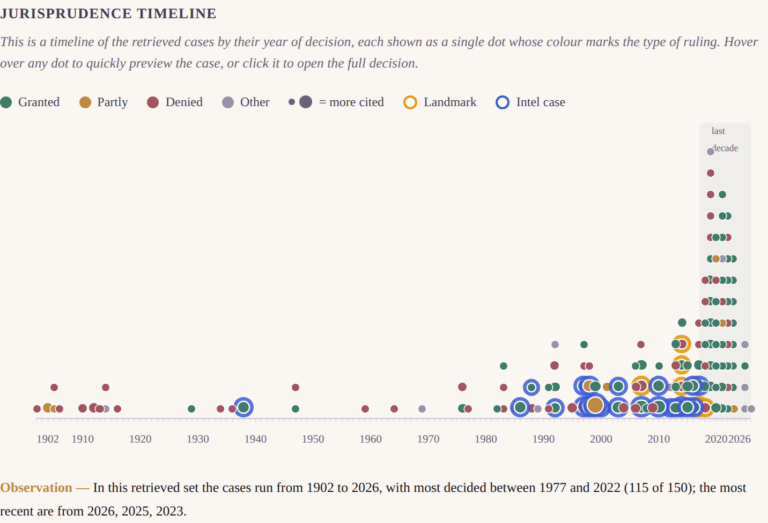
As part of the research, Intellegal’s system retrieved and organized 110 Supreme Court decisions issued between 1941 and 2023, along with relevant statutes, procedural rules, and other legal authorities.
Testing AI on a complex legal question
The foreclosure question involves more than determining whether a property has been foreclosed.
Under the legal framework described in the research, the timing of the foreclosure and the status of the property’s ownership can affect the requirements for obtaining possession.
The research examined two stages: the period when the property can still be redeemed and the period after the redemption period has expired and ownership has been consolidated.
During the redemption period, Section 7 of Act No. 3135 requires a sworn ex parte application and a bond equivalent to 12 months’ use of the property. After the redemption period expires without redemption and ownership has been consolidated, the bond is generally no longer required, subject to the applicable requirements and proof of title.
The research also examined cases involving people who are occupying the property but claim an independent right to it.
According to the analysis, a claim derived from the mortgagor is treated differently from an independent claim by a genuine third party. In the latter situation, the court may need to consider additional evidence, and an ordinary action for possession may be required.
Three AI tools used in the research
Intellegal used three tools as part of the research process: Visual Digest, Citation Map, and Deep Synthesis.
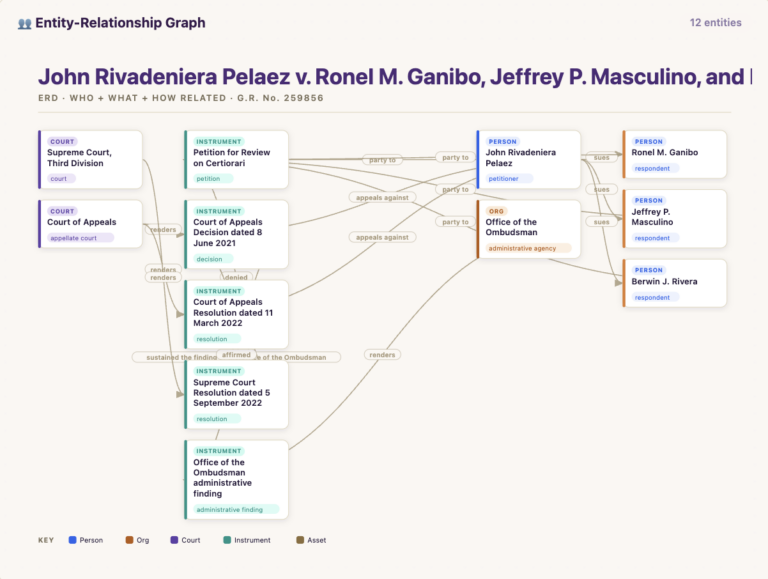
Visual Digest
Visual Digest organizes information from lengthy court decisions into structured views.
The tool identifies elements such as the timeline of a case, arguments, legal concepts, parties, courts, and claims. It can also show the progression of a case from the Regional Trial Court to the Court of Appeals and eventually the Supreme Court.
This approach is intended to help researchers identify the procedural history and legal issues of a decision before reviewing the complete ruling.
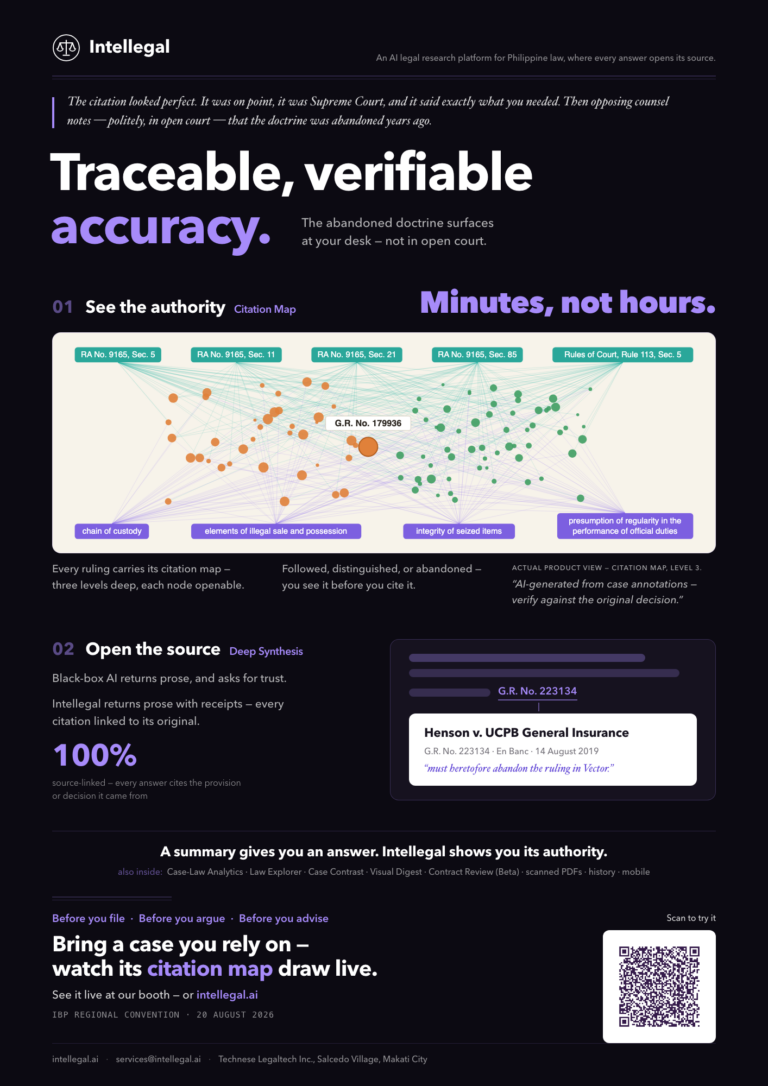
Citation Map
Citation Map focuses on the relationships between legal authorities.
It connects court decisions with the cases they cite, statutes, rules, and legal principles. The system also labels case nodes according to their procedural outcomes.
The tool allows users to follow those connections and open the underlying decisions for further review.
This is particularly relevant to legal research, where a court ruling may rely on earlier decisions and statutory provisions that need to be examined together.
Deep Synthesis
Deep Synthesis is designed for broader legal questions that involve multiple authorities.
The system breaks a question into smaller research issues, searches Philippine legal sources and current web sources, and produces an IRAC-structured report with citations. The source document says the system also checks the citations against the material it retrieved.
In the foreclosure research, Deep Synthesis separated the requirements applicable during the redemption period from those after ownership consolidation. It also examined the third-party possession issue and identified evidence potentially relevant to each side of the dispute.
Research covered 110 Supreme Court decisions
The research produced a set of 110 Supreme Court decisions covering an 82-year period from 1941 to 2023.
Of the retrieved cases:
- 22 were tagged as granted
- 4 were partly granted
- 75 were denied
- 9 were categorized as other or non-merits outcomes
However, the figures should not be interpreted as a prediction of how future foreclosure cases will be decided.
The source notes that a petition marked as “denied” does not necessarily indicate which party ultimately prevailed in the underlying property dispute. The retrieved cases also do not constitute a statistical model for predicting future decisions.
Instead, the case set provides a way to organize the authorities and identify groups of decisions that may require closer examination.
AI does not replace legal judgment
The research also highlights limitations that remain relevant when using AI for legal work.
An AI system can organize cases, identify connections between authorities, and produce a research report, but it cannot determine whether a witness is credible, authenticate a document, or know facts that have not been provided to it.
Those decisions remain dependent on the lawyer’s review of the evidence and the circumstances of an individual case.
This distinction is particularly important in legal research because an AI-generated answer can appear complete while still depending on the accuracy and relevance of the underlying sources.
Why the foreclosure case was used
The foreclosure question serves as an example of the type of legal research that can involve statutes, procedural rules, and court decisions developed over many years.
The source describes foreclosure as a test case because the relevant information is spread across different types of legal authorities, while later decisions can refine or distinguish principles established in earlier cases.
The same research challenge can occur in other areas of Philippine law where researchers need to determine which authority controls a particular question and whether a later ruling has changed or limited an earlier interpretation.
Intellegal's focus on Philippine legal sources
Intellegal is positioned in the release as a legal research platform focused specifically on Philippine law.
The platform includes Case-Law Analytics, Law Explorer, Visual Digest, Citation Map, and Deep Synthesis, with the tools designed to work with Philippine legal authorities.
The company also distinguishes its platform from general-purpose AI assistants by focusing on a Philippine legal corpus and providing access to the authorities underlying its research output.
AI-assisted legal research still requires source verification
The Intellegal research demonstrates one potential use of AI in legal research: organizing large collections of cases and connecting individual legal propositions to their underlying authorities.
The 110-case foreclosure research also illustrates why the results still need to be reviewed in context. Case counts and outcome labels can help researchers organize a body of jurisprudence, but they should not be treated as a substitute for reading the decisions or predicting how a future case will be resolved.
The document itself states that the research was independently checked against primary Philippine legal sources, including Act No. 3135, several Supreme Court decisions, and other cited authorities.
For actual legal proceedings, the source also notes that the material is not legal advice and that a licensed Philippine lawyer should verify the current law, procedural requirements, and complete factual record before making a filing or legal decision.